The 2025 ESC awards

editor
ESC
01-29-2026
2025 European Criminology Award, in recognition of a lifetime contribution to European criminology:Ernesto Ugo Savona
Professor Savona, one of the founders of the ESC, has had a stellar academic career for almost 55 years (with his first publication in 1971). He has authored towards 150 publications, of which approximately 60 have been in the English language. He was founder of Transcrime, a world-renowned institute that he has not only built, but sustained and modified, and secured, over a long period, during which it has become an established and the go-to hub for research on organised crime. His research has been outstanding and sophisticated, with contributions to empirical research such as the development of the Crime risk assessment mechanism, or a method for the assessment of the vulnerability of legal sectors. His research activities have been outstanding, with a huge number of ‘disciples’ raised at Transcrime. His authority is also reflected in the frequent consulting work for supranational and international organisations such as the EU and UN. All in all, this makes Professor Savona’s lifetime achievements well-deserving of the ESC 2025 award.

2025 “Distinguished Services to the ESC Award”: Professor Krzysztof Krajewski.
The jury considered that Professor Krzysztof Krajewski has played a crucial role in the development and consolidation of the European Society of Criminology (ESC) from its early years, contributing with vision, commitment, and sustained service. His most visible contribution was as the organiser of the 2005 ESC Annual Conference in Kraków, Poland – the first time the Society held its meeting in Central or Eastern Europe. The success of this conference marked a turning point in the ESC’s trajectory toward becoming a truly pan-European organisation. The event demonstrated the ESC’s commitment to geographic inclusivity and set a standard for future conferences across the continent.
Professor Krajewski also served on the ESC Executive Board in multiple capacities, including as President-Elect (2006–2007), President (2007–2008), and Past President (2008–2009). During these years, he worked tirelessly to strengthen the Society’s institutional foundation and promote collaboration across national borders. He had a leading role in the ESC Fellowship programme, designed to support early-career criminologists from Central and Eastern Europe. This allowed empowering new generations of scholars, reinforcing the Society’s commitment to academic excellence and regional inclusion.
His leadership in the ESC was essential in transforming the society from a Western European initiative into a genuinely European scholarly society. He worked to ensure that the Society would serve as a platform for exchange and growth for criminologists across the entire continent.
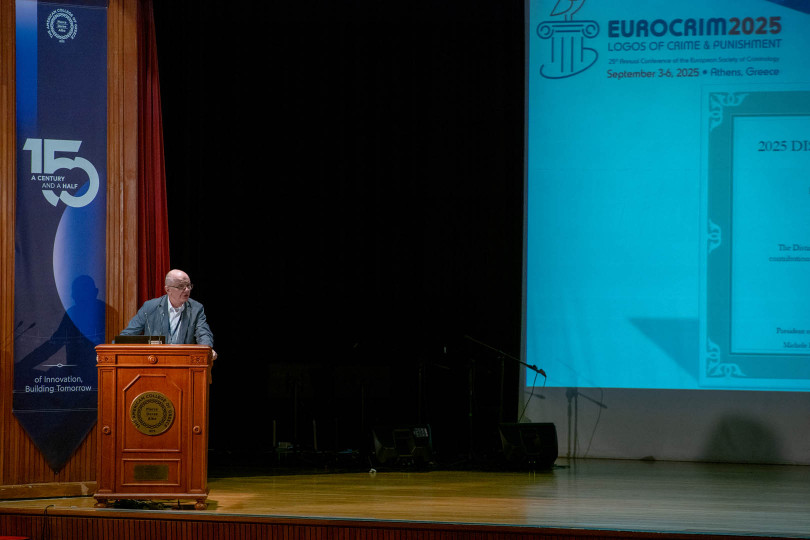
2025 Book award: Gomes, S., & Rocker, D. (2024). Gender, Prison and Reentry Experiences: A Matter of Time (1st ed.). Routledge.
The Jury considred that Gomes and Rocker’s Gender, Prison and Reentry Experiences: A Matter of Time is a thoughtful and timely contribution to the fields of Criminology, Sociology, and Gender Studies. It includes careful empirical work, clear theoretical framing, and relevance to ongoing debates about incarceration and social justice. The book addresses a notable gap in the literature by focusing on the first phase of reentry—the period still within prison walls – challenging the common assumption that reentry begins only after release. This perspective allows for a more comprehensive understanding of how prison experiences shape individuals’ expectations, identities, and prospects for reintegration.
It is thus a valuable contribution to the field through its integration of 78 interviews with incarcerated men and women in Portugal. The authors use a qualitative, ethnographic approach that is both rigorous and ethically attentive. Their analysis is grounded in the lived experiences of participants and is enriched by the authors’ sustained engagement with the prison environment. The result is a nuanced account of how gender, institutional practices, and structural inequalities intersect in shaping reentry experiences. The book’s gender analysis is particularly valuable, highlighting the differences of women’s and men’s experiences of incarceration. The theoretical framework draws on established perspectives – life-course theory, narrative identity, feminist criminology, and critical reentry studies – and applies them effectively, making it a useful resource for both scholars and students. Importantly, the book also engages with policy and practice. It offers recommendations for improving prison conditions and reentry support, while also aligning with broader calls for decarceration and the reimagining of justice. These proposals are grounded in the empirical findings and reflect a commitment to social justice without being overly idealistic.
The jury has then decided that this is a thoughtful and carefully executed study that offers valuable insights, particularly through its gender analysis and broad mapping of the challenges associated with reentry. And although the book’s findings may not be entirely surprising to those familiar with the field, its strength lies in its clarity, its contextual specificity, and its ability to connect individual narratives to broader institutional and structural dynamics. It is a well-executed study that contributes meaningfully to ongoing discussions about incarceration, gender, and reentry. Gender, Prison and Reentry Experiences is a carefully argued and socially relevant work that reflects the values of the ESC Book Award. It deserves recognition for its contribution to understanding how incarceration shapes lives and how justice systems might better support those who pass through them.
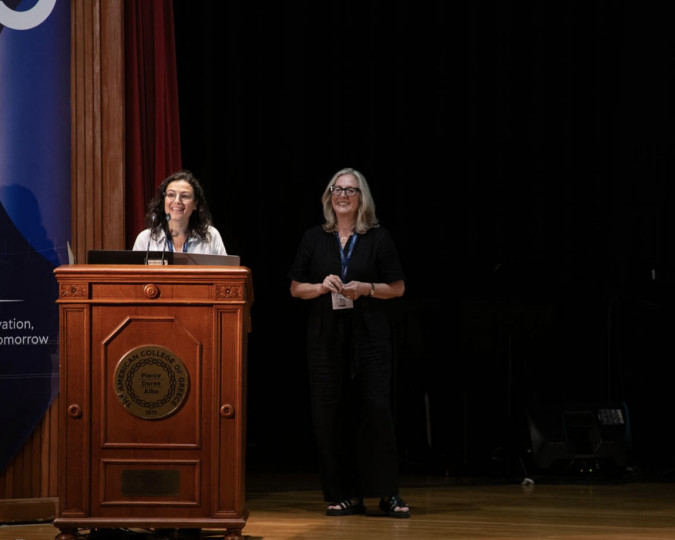
2025 ESC Early Career Award: Miguel Basto Pereira
The jury stressed the number and quality of candidates nominated and how their work highlights the buoyancy of European criminology and bodes well for its future. However, on the basis of both the quantity and the evident quality of his publications and their resonance within Criminology, the jury recommended that the ESC Early Career Award 2025 be awarded to Miguel Basto Pereira, who obtained his PhD in 2017.
Miguel Basto Pereira is an outstanding early career scholar who has significantly contributed to criminology, particularly in the area of developmental and life-course criminology. His work has advanced our understanding of risk factors underlying the development and persistence of criminal careers throughout the lifecourse. His contribution to the field has been both methodological and conceptual: through his work (also in collaboration with international colleagues), he has developed and used innovative methodologies and also introduced a new conceptual framework for the analysis of key vulnerabilities during childhood, which expose individuals to risks for antisocial behaviour and crime along the lifecourse.
The jury considered Miguel Basto Pereira’s track record to be extremely impressive, and his empirical and conceptual contribution to criminology notable, and was thus convinced of his outstanding scientific achievement.
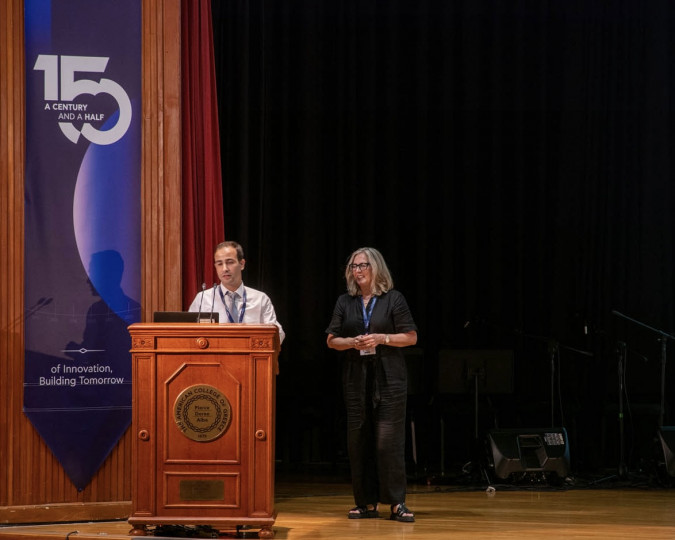
2024 EJC Best Article of the Year Award: Estimating the incapacitation effect among first-time incarcerated offenders by Enes Al Weswasi
The jury congratulates Al Weswasi for his very cleverly well-designed study on the incapacitation effect among first-time incarcerated offenders. His paper takes on this challenge by applying a meticulous state-of-the-art propensity score matching approach, which mimics a randomised experiment by finding a ‘statistical twin’ who received a non-custodial sentence (e.g., a fine) for each participant who received a custodial sentence. Using detailed Swedish data, Al Weswasi shows this procedure produces a well-matched control group for estimating counterfactuals. Using this matched sample, he is then able to estimate that incapacitation has modest effects overall, which complements and advances upon findings from previous research. Further, the paper also shows that the effects of incapacitation, while small for people at low risk of incarceration, are much stronger for those at the highest risk. This finding is highly relevant for criminal justice policy, providing evidence that non-custodial sanctions may be a favourable alternative especially for those at low risk of incarceration.
The jury agreed that this paper makes an important and robust empirical contribution towards answering a seminal criminological question that is methodologically challenging and has direct and important implications for criminal justice policy and practice relating to the efficacy and value of incarceration. They also agreed that it makes a substantial contribution to debate in European criminology and criminal justice, and the wider discipline more generally, making it exemplary of the best published works of European criminological research