2026 At large board member: Natalia Daśko
editor
ESC
08-06-2026
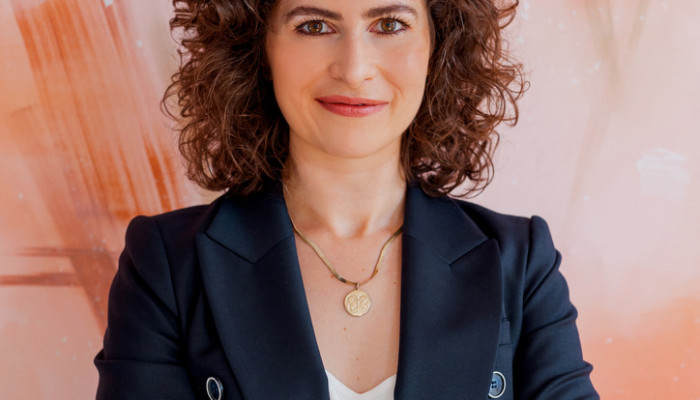
My research focuses primarily on two broad areas: sexual crime and economic crime, particularly the counterfeiting of goods, pharmaceutical crime and food crime. For me, however, understanding the nature of crime and the people who commit it has never been purely a theoretical endeavour. Alongside my academic career, I have practised for many years as a criminal defence lawyer. This gives me first-hand experience of the criminal justice system, while criminological knowledge helps me better understand offending and offenders in my work as a practitioner.
I graduated in Law from Nicolaus Copernicus University in Toruń, Poland, where my master's thesis, Criminological Aspects of Female Criminality, marked the beginning of my academic interest in Criminology. I subsequently obtained my PhD in Law from the same University with a dissertation entitled Criminal Protection of Trademarks. I am currently working on my habilitation. In 2018, I also completed the Postgraduate Studies in Intellectual Property Law at the Faculty of Law and Administration of the University of Warsaw.
My research frequently connects theory with practice. In addition to analysing Law and Criminal Policy, I conduct empirical research, including court-file studies and in-depth interviews with criminal justice professionals such as police officers and prosecutors. I publish in Polish journals as well as various international academic outlets. I am currently co-editing the special issue of the Journal of Contemporary Criminal Justice ‘Rape Control in Europe – Towards a New European Paradigm’, to be published in November 2027, which examines sexual crime and its regulation across selected European jurisdictions.
I am also committed to making knowledge about Criminology, Criminal Law and Criminal Policy accessible beyond specialised academic debates. Most recently, I co-edited a textbook on Criminal Policy in Poland, to which I contributed chapters on responses to sexual offences and road traffic crime.
International cooperation has become an essential part of my academic work. It allows me not only to exchange ideas and experiences with colleagues from different academic traditions, but also to develop comparative perspectives in my own research. Most recently, in 2026, I undertook research stays at the College of Law at the University of Nebraska–Lincoln in the United States and at the Department of Business and Economics Law at Luiss Guido Carli University in Rome, Italy.
I have been an active participant in EUROCRIM conferences for many years and regularly present my research at other major international academic events. In 2026, for example, I presented a paper on Food Fraud at the Stockholm Criminology Symposium. I also actively seek opportunities to engage with scholars outside Criminology and Law, as I consider interdisciplinarity to be an essential condition for high-quality research. In 2025, for example, I presented my work at the IPSA World Congress of Political Science in Seoul, Korea.
This interdisciplinary approach is also reflected in my institutional activities and research collaborations. I lead the Interdisciplinary Research Team on Legal Issues of Food and Nutrition at Nicolaus Copernicus University and am a member of DigiTech4SELE – Digital Technologies for Society, Economy, Laws and Ethics, as well as the University Interdisciplinary Centre for Technology in Society. Through these initiatives, I have had the opportunity to work with researchers from other disciplines, including Economics, Chemistry, Sociology and Ethics. I have also been involved in several internationally funded research projects, including projects supported by the European Commission and the Polish National Science Centre. I currently serve as Poland’s National Rapporteur to the International Association of Penal Law (AIDP), responsible for preparing the Polish National Report on Gender, Sexual Orientation and Gender Identity in Criminal Law for Section 2 of the XXII International Congress of Penal Law.
I strongly believe that research should contribute to practical goals, including better criminal policy and more effective responses to emerging forms of crime and social harm.
Being elected as an at-large member of the ESC Board would be, for me, above all an opportunity for responsible and committed work for the Society and for European Criminology. I would particularly like to bring a Central and Eastern European perspective to the Board – one shaped by the distinctive research traditions, criminological problems and profound social, political and legal transformations experienced in our part of Europe.
I would also like to contribute to strengthening opportunities for networking and academic exchange worldwide, particularly for scholars who have more limited access to established international networks. Coming from Central and Eastern Europe, I am particularly aware that access to international academic networks and opportunities for collaboration remains uneven across Europe. From my own experience, I know how important international contacts, collaboration and the exchange of ideas are not only for individual researchers but, above all, for the advancement of criminological knowledge. I would therefore be particularly committed to helping create opportunities for scholars from Europe and around the world, those from divergent academic traditions and career stages, to meet, collaborate and learn from one another. In short, my lifelong goal and dream is to help people connect, network, and to grow and develop international collaborations to the benefit of all.