Criminology in… Poland
Krzysztof Krajewski
Jagiellonian University
09-06-2026

Dagmara Woźniakowska
University of Warsaw
09-06-2026
The beginnings of Polish Criminology can be traced back, like in many other European countries, to the turn of the 19thand 20th centuries. However, at that time Poland did not exist as an independent nation: territories of the former Polish-Lithuanian Commonwealth since the end of the 18th century were partitioned between Russia, Germany (earlier Prussia), and Austria. Polish universities existed only since 1863 in the liberally governed Austrian part, namely in Krakow and in Lviv (Lwów in Polish, Lemberg in German). The university in Warsaw was Russian. The same applied to the university in Vilnius (Wilno in Polish). In the German part, there was no university at all, with the nearest German universities being located in Berlin and in Breslau (Wrocław in Polish).

Like in many other countries, three main sources for the development of Criminology could be identified. The first one was related to jurisprudence and resulted from the emergence of the Positive School in Penal Law. Its most prominent representative was Juliusz Makarewicz (1872-1955), Professor of Penal Law in Lviv since 1909. Although he was never directly involved in criminological research, he was an enthusiast of the Sociological School and was strongly influenced by Franz von Liszt (1851-1919) and his ideas about the purposes of punishment and of individual prevention. At the end of the 19th century, Makarewicz had already engaged in debate with representatives of the Classical School, having published critical assessments of that current of thought and its insistence on free will and the retributive concept of punishment. This constituted direct polemics with the views of Edmund Krzymuski (1852-1928), Professor of Penal Law at the Jagiellonian University in Krakow, and the most prominent representative of the Classical School. The debates between Makarewicz and Krzymuski formed the equivalent of the “dispute between schools” (Schulenstreit) which involved Franz von Liszt and Karl von Birkmeyer (1847-1920) in Germany.
The second source for the development of Criminology came from Medicine. The main representative of this current of thought was Leon Wachholz (1867-1942), Professor of Forensic Medicine at the Jagiellonian University, in Krakow. He also published on issues related to forensic psychiatry, including the concept of moral insanity, which also brought him to the field of Criminology. Later on, he developed his own multicausal concept of criminal behaviour, arguing for a biosocial theory of crime causation.
The most prominent representative of the third source, the sociological one, was Ludwik Krzywicki (1859-1941), Professor at the Society for Scientific Courses (Towarzystwo Kursów Naukowych), a small private Polish university founded in Warsaw in 1905 which later became the nucleus of today's Warsaw University. Krzywicki, considered to be the founding father of Polish Sociology, was declared a Socialist and Marxist. Criminology was by no means his main area of research, but by the turn of the century he had published several articles establishing the new discipline of Criminology in the country. He perceived social conditions as the main causes of criminal behaviour and was strongly critical of Lombroso and of Criminal Anthropology. He was also the first person to use, in the title of an article published in 1888, the Polish term Kryminologia, or Criminology (Krzywicki, 1888).
It is also worth mentioning another founding father not only of Polish, but also of American Sociology: Florian Znaniecki (1882-1958), who provided a thread connecting Polish Criminology with the iconic Chicago School of Criminology. In 1919 Znaniecki was among the founders of Poznań University and could hardly be described as a criminologist, but in the years 1918-1920 he co-authored, together with William I. Thomas, the multi-volume study The Polish Peasant in Europe and America (Znaniecki & Thomas, 1918). His analyses of social disorganisation, migration, and normative conflict contained in that study laid important foundations for various criminological theories.
After Poland regained independence in November 1918, during the interwar period, there was no radical change in the institutional situation of Criminology. There were only five universities in the country. Three of them, in Krakow, Vilnius and Lviv[1], had a long history as they were established respectively in 1364, 1579 and 1661. The Polish university in Warsaw was formally established only during World War I in 1918, and the University of Poznań was created in 1919. Additionally, there was the Polish Free University in Warsaw (Wolna Wszechnica Polska), a private, progressive higher education institution that provided accessible, socially engaged academic education outside the traditional university system. It was the only academic institution with a department of Criminology, headed by Adam Ettinger (1878-1934), who was not only a declared Marxist but also an activist for the radical wing of the Polish social democratic movement before World War I, and for the communist party after the war. He was the author of the first Polish monograph in the field of Criminology: The criminal in the light of Anthropology and Psychology (Zbrodniarz w świetle antropoligii i psychologii). It contained a strong criticism of Lombroso’s anthropological concepts and an equally strong support for a sociological approach, including concepts by Enrico Ferri (Ettinger, 1924). Leon Radzinowicz (1907-1999), in his memoirs “Adventures in Criminology” (Radzinowicz 1999), is very critical of Ettinger – without actually mentioning his name – considering him an orthodox and dogmatic Marxist, which may have been true, even if his book does not necessarily confirm it. Certainly, it refers to Marx and to Engels, but rather parsimoniously, especially when compared with the excesses often present in the social science literature of the Soviet Bloc during the years 1948-1989.
Interestingly enough, there are no traces of any close contacts between Radzinowicz and Juliusz Makarewicz, the most prominent Polish legal scholar in Penal Law and the most important person behind the 1932 Polish Penal Code, considered to be a very modern piece of penal legislation. It was based on the ideas of the Sociological School, but without some of the extreme solutions adopted, for instance, in the Italian Rocco Code. Despite being engaged primarily in traditional normative legal analyses, Makarewicz, as representative of the Sociological School, was also interested in criminological topics. Therefore, his and Radzinowicz’s views on Penal Law and Penal Policy, especially on the role of individual prevention, were, to a large extent, convergent. Despite this, both men seem never to have cooperated, and in 1938 Radzinowicz left Poland for Britain on a half-official mission to study the British penitentiary system, definitely settling in the UK. What was an enormous gain for Britain was a great loss for Polish Criminology. At the same time, leaving Poland could have saved Radzinowicz’s life. Being Jewish, his chances of surviving the German occupation were certainly narrow.
After World War II, apart from sporadic private contacts with some people, Radzinowicz maintained practically no contact with the communist ruled Poland, having visited the country of his birth only once, during the 1970s. However, he published one article in a Polish journal (Radzinowicz, 1969). Before his departure to Britain, he had collected data on the impact of the Great Depression on crime but did not manage to publish on the subject. He finally used that data in a couple of his English-written publications (Radzinowicz 1941a; 1941b), and, by the end of the 1960s, Prof. Jerzy Jasiński, in agreement with Radzinowicz, prepared the Polish versions, which were then published with a short introduction by Radzinowicz himself.
In his aforementioned memoirs, Radzinowicz wrote that any hopes for the development of Criminology in Poland had to be placed in two young scholars, whose names he did not reveal. He most likely had in mind Tadeusz Kuczma and Stanisław Batawia. Unfortunately, Tadeusz Kuczma (1905-1940), because of World War II, became another loss for Polish Criminology. Kuczma was a prosecutor and an Assistant at Poznań University. In the years 1933-1935, he was a fellow of the Rockefeller Foundation in Chicago, where he worked under the supervision of Edwin Sutherland. Therefore, he constituted an additional link between Polish Criminology and the Chicago School. It is impossible to say today whether this had anything to do with the position of Florian Znaniecki, who was Professor of Sociology in Poznań, esteemed in the US and especially in Chicago. In 1939, Kuczma published a monograph titled Genetic factor of crime(Genetyczne ujęcie przestępstwa) (Kuczma, 1939), where the word “genetic” was used in a somewhat confusing way for a contemporary reader, as it meant a rather complex set of factors influencing criminal behaviour, and had nothing to do with today’s meaning of genetics. It was devoted to the analysis and discussion of individual and environmental theories and factors of criminal behaviour. It also provided a proposal for criminological analysis, bearing some traces of Znaniecki’s humanistic Sociology. Unfortunately, in the autumn of 1939, like many scholars from Polish universities in Kraków, Lviv and Poznań, he was arrested by the Nazis and did not survive the especially brutal maltreatment in a Gestapo prison.
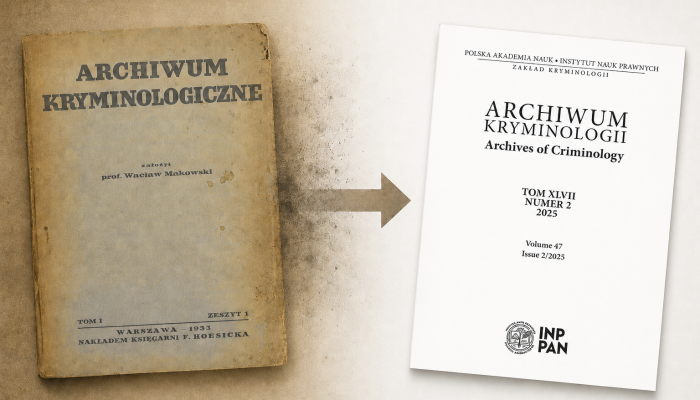
The second person Radzinowicz obviously had in mind as a promising criminologist was Stanisław Batawia (1898-1980). A lawyer and psychiatrist, in 1931 he published the monograph Introduction to the study of the criminal (Wstęp do nauki o przestępcy) (Batawia, 1931), a book considered valuable enough to be reissued in 1984. Batawia was the editor-in-chief of the journal Criminological Archives (Archiwum Kryminologiczne), the most important journal devoted to Criminology in pre-World War II Poland. In the years 1933-1939, five issues were published altogether, containing crucial publications for the development of criminological research in Poland, including several articles by Radzinowicz.
During the 1930s, there were other people involved in criminological research, who then continued after World War II. The first deserving a mention is Witold Świda (1899-1989), Lecturer at Vilnius University. His area of interest included primarily recidivists and issues related to habitual and dangerous offenders. He published several articles on the subject, including detailed statistical analysis and assessment of the application of special security measures for dangerous offenders, introduced under the new 1932 Penal Code (Świda, 1936). These special measures, adopted under the influence of the Sociological School of thought, made possible the post-penal, indeterminate detention of certain offenders because of their dangerousness for society, and were subjected to ample debate. Radzinowicz also participated critically in it.
Another person worth mentioning is Paweł Horoszowski (1908-1986). During the 1930s he was involved in research on homicide, especially what was considered “homicide of passion” (Horoszowski, 1939). His monograph on the subject was published only after the war, and his studies were some of the first examples of research using court files as a data source, a method which became very popular in Polish Criminology. After World War II, Horoszowski became more involved in Forensic Science or Criminalistics, particularly researching the lie detector. He was probably the first example of a specific combination between Criminology and Criminalistics, a pattern that became quite common not only in Poland but also throughout Central and Eastern Europe.
With the outbreak of World War II, Criminology in Poland came to a halt and, in effect, ceased to exist. The war years were a struggle for survival and left no room for conducting scientific research in this field. The war also brought enormous human losses - for example, of the five pre-war staff members of the Department of Criminology at the University of Poznań, only one survived. Severe damage to infrastructure was also noticeable, with entire buildings and facilities destroyed, and, with them, books, textbooks, and research materials were lost. In sum, material losses affected the whole scientific infrastructure in Warsaw.
In the immediate post-war years, another challenge was that the very existence of Criminology as a discipline was questioned, and ideological arguments about its alleged lack of scientific rigour prevailed. It was argued that Criminology should not be treated as a separate discipline, and that issues concerning the nature, causes, and trends of crime should be explained within the framework of Criminal Law (Lernell, 1952). Marxism–Leninism was thought to provide a definitive explanation of the aetiology of crime, which, in a communist state, was viewed merely as a consequence of the fact that most people were socialised earlier under the system of capitalist exploitation (Fajst, 1995). Therefore, during the first post-war years, Criminology experienced a deep crisis. But it never disappeared completely from the landscape of Polish academia.
Among the pre-war scholars involved in Criminology who survived the war and continued their work in Poland were Witold Świda, Paweł Horoszowski, Józef Bossowski and, most of all, Stanisław Batawia. As early as August 1945, Stanisław Batawia was habilitated as a docent in Criminology, with his dissertation having been submitted just before the outbreak of the war (Pływaczewski, 2019, p. 395). And in 1946, the first Department of Criminology was established at the University of Łódź by Paweł Horoszowski. The second department was created in 1949 at the University of Warsaw by Stanisław Batawia (Pływaczewski, 2019, p. 389). During this period, Stanisław Batawia conducted research on Nazi war criminals. His analysis of the biography of Rudolf Höss, the commandant of the Auschwitz extermination camp, became particularly well known (Batawia, 2003), as it was based, among other data sources, on personal interviews. Rudolf Höss was tried in court and subsequently executed in Poland.
The death of Joseph Stalin in 1953 somewhat softened the authorities’ approach to Criminology as a discipline. The political thaw also led to a reorganisation of the structures of the Polish Academy of Sciences, within which the Institute of Law Studies was established in 1956. The Department of Criminology, headed by Stanisław Batawia, became part of this institute. The following years marked a very dynamic period in the development of Criminology in Poland, and a significant contribution of Professor Batawia to the development of the field, at that time, was the creation of an interdisciplinary research team. For many years, it brought together scholars from diverse fields, including Law, Psychiatry, Psychology, and Sociology, and was often expanded to include practitioners such as probation officers and medical professionals. This diversity generated clear added value: combining different perspectives enabled a more comprehensive understanding of the issues studied, the use of varied research methods, and multi-layered interpretations of results. As a result, studies emerged that would not have been possible within a single discipline alone.
The political situation also dictated the focus of research: in the Polish People’s Republic, Criminology was treated primarily as a science concerned with socially maladjusted individuals (Fajst, 2006). At the Department of Criminology, research focused on groups such as recidivists, juveniles and young offenders, prostitutes, and individuals with alcohol addiction. Over time, new areas of research emerged, including criminal policy, recidivism, “social parasitism”[1], the analysis of criminological theories, the ecology of crime, victims, restorative justice, execution of penalties, general prevention, and economic crime.
Until 1989, Poland functioned within the Soviet sphere of influence as a member of the Eastern Bloc, which significantly limited contacts with the West. Nevertheless, Polish criminologists of that time - many of whom were proficient in foreign languages - were carefully keeping track of developments in Western Europe and the United States. The fact is that the quality of their research did not, in any way, fall short of international standards.
A particularly impressive aspect of criminological research at the time was the use of multiple research techniques in a single study. These included, for example, community interviews, assessments of offenders’ intelligence levels, knowledge testing, and anonymous surveys completed by school students. Researchers also relied on document analysis, court files, environmental studies, as well as psychological, psychiatric, general medical, and neurological examinations. They conducted interviews with juvenile offenders and their mothers, with prisoners and their families, and used questionnaires distributed to various institutions. From as early as the 1970s, self-report methods were also employed (Buczkowski et al., 2007, pp. 51–52). This was facilitated by a very different research environment than today: large, interdisciplinary teams of experts working in one place, and the absence of strict time pressure to complete projects. The main drawback of research conducted at that time was the little consideration given to publishing results in English or in international journals. As a result, many excellent studies are available only in Polish.
During the communist period, between 1965 and 1969, a group of Chairs of Criminological Sciences operated in Wrocław under the leadership of Professor Witold Świda. In 1978, a Department of Criminology was established in Kraków at the Jagiellonian University. From the 1970s on, Criminology in Gdańsk, Wrocław, Katowice (University of Silesia) and Torun developed within Criminal Law structures, while separate chairs emerged only later as part of organisational reforms. Subsequent independent research units appeared after the collapse of communism: in 1997 in Białystok, and in 1999 in Olsztyn (University of Warmia and Mazury).
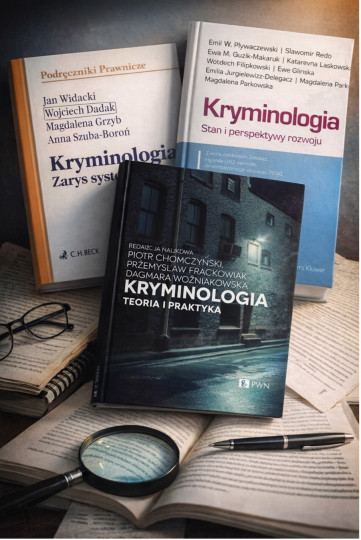
In post-war Poland, several criminology textbooks were also produced. Immediately after the war, as early as 1945, the study News from the Criminological Sciences (Wiadomości z nauk kryminologicznych) was published, written by Józef Jan Bossowski (Bossowski, 1945). The time for more comprehensive textbooks came only after the political thaw following the death of Joseph Stalin. In the late 1950s, Paweł Horoszowski published the first Criminology textbook, with a more complete version appearing only in the mid-1960s (Horoszowski, 1965). In the 1970s and 1980s, at least five Criminology textbooks and coursebooks were published (Hołyst, 1979; Lernell, 1978; Marek, 1986; Świda, 1977; Tyszkiewicz, 1986). This culminated in 1999 with the publication of an outstanding textbook titled Criminology, authored by scholars from the Jagiellonian University (Błachut et al., 1999). It is worth highlighting that over the past seven years, as many as three new textbooks have appeared on the market: one published by a team of scholars from Białystok (Pływaczewski et al., 2019), another from Kraków (Widacki et al., 2022), and a third resulting from collaboration among authors from across Poland (Chomczyński et al., 2024).
Polish Criminology in the twenty-first century combines traditional areas of research -such as crime trends, criminal policy, and the functioning of the justice system - with a growing range of new themes, including victimisation, migration, human rights, green criminology, rural criminology, and restorative justice. Studies about the structure and dynamics of crime, as well as recidivism and criminal careers, continue to form an important core of the discipline, often supported by increasingly sophisticated quantitative analyses. Simultaneously, there is a strong and persistent interest in the functioning of criminal justice institutions, sentencing practices, and the execution of penalties, reflecting the close connection between Criminology and Criminal Law in Poland.
In recent years, however, the field has expanded significantly. Greater attention is now paid to the experiences and rights of victims, issues of social exclusion and marginalisation, and the broader social and political contexts of crime control. Research on migration, border control, and the treatment of non-citizens has also gained prominence, alongside a growing engagement with critical criminology. Methodologically, Polish Criminology is diverse and empirically oriented, using both qualitative and quantitative approaches, including self-report and victimisation studies. As a result, it is increasingly interdisciplinary and internationally connected, actively contributing to contemporary debates on crime, punishment, and social control.
In Poland, Criminology remains a popular field of study. The Polish Society of Criminology, established in 1991, currently has 131 members, and its newsletter reaches nearly 200 recipients. Every year, a large Polish delegation also attends the annual conferences of the European Society of Criminology. In addition to Criminology-related articles being published in journals of Law, Sociology, and social rehabilitation Pedagogy, there are also dedicated Criminology journals published on a regular basis: Archiwum Kryminologii (The Archives of Criminology) and Biuletyn Kryminologiczny (The Criminological Bulletin). These journals are available in open access, and the first two regularly include articles in English. Archiwum Kryminologii is a direct continuation of the pre-war Archiwum Kryminologiczne, which was revived in 1960 under a slightly modified title by Stanisław Batawia, who had served as its editor before the war. Today, Archiwum Kryminologii is a biannual journal and is becoming increasingly international. A significant proportion of its articles are published in English, and all contributions in thematic issues are in English.
Simultaneously, Criminology is a popular choice of study. Bachelor’s and master’s programmes are offered at the University of Warsaw, the University of Białystok, the University of Gdańsk, the University of Warmia and Mazury in Olsztyn, the University of Wrocław (where the master’s programme is offered as “Legal Criminology”), and the University of Siedlce. Bachelor’s programmes are also available at Maria Curie-Skłodowska University in Lublin and Jan Kochanowski University in Kielce. Education at both levels is also provided by the Police Academy in Szczytno, which offers programmes open to civilian students. The attractiveness of the field has also been recognised by the University of Zielona Góra, which offers a programme in “Social Rehabilitation with Criminology” at both bachelor’s and master’s levels. In addition, the Pomeranian University in Słupsk, Kielce University of Technology, and Rzeszów University of Technology offer Criminology specialisations in separate programmes. Bachelor’s programmes are also provided by Universities of Applied Studies in Gorzów Wielkopolski and in Piła. Interest in Criminology remains high at private universities as well.
Polish Criminology thus has a rich tradition spanning more than a century. Its development was neither linear nor easy. The emerging discipline was severely disrupted by the devastation of World War II, which resulted in the loss of both human capital and institutional infrastructure. The following decades of communist rule further constrained its growth, limiting international exchange and shaping research agendas in ways that reflected the political context. Yet, despite these challenges, Criminology in Poland endured. It preserved its continuity through successive generations of scholars and gradually rebuilt its institutional base. Today, it stands as a vibrant and expanding academic field, attracting a growing number of students, researchers, and practitioners. Its interdisciplinary character, methodological diversity, and openness to international developments position it well for future growth. With this strong foundation, Polish Criminology looks ahead with both confidence and curiosity, ready to engage with new challenges and contribute to global debates on crime and social control.
References:
Batawia, S. (1931). Wstęp do nauki o przestępcy [Introduction to the study of the criminal]. Warszawa 1931.
Batawia, S. (2003). Rudolf Hoess komendant obozu koncentacyjnego w Oświęcimiu [Rudolf Höss, Commandant of the Auschwitz Concentration Camp]. Archiwum Kryminologii XXVII. https://czasopisma.inp.pan.pl/index.php/ak/article/view/356
Błachut, J., Gaberle, A., & Krajewski, K. (1999). Kryminologia [Criminology]. Gdańsk.
Bossowski, J. J. (1945). Wiadomości z nauk kryminologicznych [News from the Criminological Sciences]. Poznań.https://sbc.wbp.kielce.pl/dlibra/docmetadata?showContent=true&id=46494
Buczkowski, K., Klaus, W., & Woźniakowska-Fajst, D. (2007). Zakład Kryminologii INP PAN z perspektywy współczesnej [The Department of Criminology at the Institute of Legal Sciences of the Polish Academy of Sciences: A Contemporary Perspective]. Archiwum Kryminologii XXIX–XXX. https://czasopisma.inp.pan.pl/index.php/ak/article/view/235/buczkowski_klaus_wozniakowska-_K2007-2008D.pdf
Chomczyński, P., Frąckowiak, P., & Woźniakowska, D. (Eds). (2024). Kryminologia: Teoria i praktyka [Criminology: Theory and Practice], wydanie pierwsze. Warszawa. https://doi.org/10.53271/2023.175
Ettinger, A. (1924). Zbrodniarz w świetle antropologii i kryminologii [The criminal in the light of anthropology and psychology]. Warszawa. https://rcin.org.pl/dlibra/doccontent?id=12750
Fajst, M. (1995). Spór o kryminologię w Polsce w okresie stalinizmu [The Debate on Criminology in Poland during the Stalinist Period]. Studia Iuridica, 27.
Fajst, M. (2006). Leszek Lernell, Stanisław Batawia i warszawska szkoła kryminologiczna w latach pięćdziesiątych XX wieku [Leszek Lernell, Stanisław Batawia and the Warsaw School of Criminology in the 1950s]. Studia Iuridica, 46.
Hołyst, B. (1979). Kryminologia [Criminology]. Warszawa. https://static.profinfo.pl/file/core_products/2017/1/17/41eb4e35b80603462ce24fffecbd0c4b/kryminologia.pdf
Horoszowski, P. (1939). Zabójstwo z afektu w świetle 330 spraw sądowych [Crime of Passion in the Light of 330 Court Cases], Archiwum Kryminologiczne 3, nr. 1-2.
Horoszowski, P. (1965). Kryminologia [Criminology]. Warszawa.
Krzywicki, L. (1888). Kryminologia [Criminology], Prawda nr. 44 and nr. 45.https://jbc.bj.uj.edu.pl/dlibra/publication/810804/edition/780394
Kuczma, T. (1939). Genetyczne ujęcie przestępstwa [Genetic factor of crime].Poznań.https://www.wbc.poznan.pl/dlibra/publication/59073/edition/74993/content
Lernell, L. (1952). Problematyka przestępczości w systemie nauki prawa karnego [The Problem of Crime within the System of Criminal Law Science]. Państwo i Prawo, nr. 12.
Lernell, L. (1978). Zarys kryminologii ogólnej [An Outline of General Criminology]. Warszawa.
Marek, A. (1986). Kryminologia [Criminology]. Toruń.
Pływaczewski, E. W. (2019). Polska kryminologia i nauki penalne w pierwszej dekadzie po zakończeniu II wojny światowej [Polish Criminology and Penal Sciences in the First Decade after the End of the Second World War]. Archiwum Kryminologii XLI, nr. 2. https://czasopisma.inp.pan.pl/index.php/ak/article/view/1106/plywaczewski_polska_kryminolog_7420AK2019V.pdf
Pływaczewski, E. W., Redo, S., Guzik-Makaruk, E. M., Laskowska, K., Filipkowski, W., Glińska, E., Jurgielewicz-Delegacz, & Perkowska, M. (Eds). (2019). Kryminologia: Stan i perspektywy rozwoju: z uwzględnieniem założeń Agendy ONZ na rzecz zrównoważonego rozwoju 2030 [Criminology: Current State and Development Prospects in the Context of the UN 2030 Agenda for Sustainable Development]. Warszawa. https://www.profinfo.pl/sklep/kryminologia-stan-i-perspektywy-rozwoju,121527.html
Rabinowicz, L. (1933). Podstawy nauki o więziennictwie [Fundamentals of Penitentiary Science]. Warszawa.
Radzinowicz, L. (1935a). Przestępczość w Polsce w latach 1924 – 1933 na podstawie policyjnej statystyki kryminalnej [Crime in Poland, 1924–1933: Based on Police Criminal Statistics], Archiwum Kryminologiczne 2, nr. 1-2. https://jbc.bj.uj.edu.pl/dlibra/publication/863168/edition/829286
Radzinowicz L. (1935b). Struktura przestępczości w Polsce w świetle statystyki sądowej [The Structure of Crime in Poland in the Light of Judicial Statistics], Archiwum Kryminologiczne 2, nr. 3-4. https://jbc.bj.uj.edu.pl/dlibra/publication/863169
Radzinowicz, L. (1941a). The Influence of Economic Conditions on Crime – I, The Sociological Review XXXIII, nr. 1-2. https://journals.sagepub.com/doi/abs/10.1111/j.1467-954X.1941.tb02062.x
Radzinowicz, L. (1941b). The Influence of Economic Conditions on Crime – II, The Sociological Review XXXIII, nr. 3-4.https://journals.sagepub.com/doi/abs/10.1111/j.1467-954X.1941.tb02071.x
Radzinowicz, L. (1969). Wpływ warunków ekonomicznych na przestępczość w Polsce w latach 1928 – 1934 [The Impact of Economic Conditions on Crime in Poland, 1928–1934], Czasopismo Prawno-Historyczne 21, nr. 2. https://pressto.amu.edu.pl/index.php/cph/article/view/50663/40939
Radzinowicz, L. (1999). Adventures in Criminology. London and New York.
Świda, W. (1936). Zakład dla niepoprawnych w praktyce sądów polskich [The Institution for Incorrigible Offenders in the Practice of Polish Courts], Głos Sądownictwa 8, nr. 7-8. https://jbc.bj.uj.edu.pl/dlibra/publication/180279/edition/171249
Świda, W. (Ed.). (1977). Kryminologia [Criminology]. Warszawa.
Thomas, W. I., Znaniecki F. (1918). The Polish Peasant in Europe and America. Monograph of an Immigrant Group, Vol. 1-5. Boston. https://dn790007.ca.archive.org/0/items/polishpeasantine01thomuoft/polishpeasantine01thomuoft.pdf
Tyszkiewicz, L. (1986). Kryminologia. Zarys systemu [Criminology: An Outline of the System]. Katowice.
Widacki, J. (2021). Dlaczego w okresie międzywojennym na polskich uniwersytetach nie było katedr kryminologii? [Why Were There No Criminology Chairs at Polish Universities during the Interwar Period?] In D. Zienkiewicz (Ed.), Wokół kryminalistyki. Nauka i praktyka. Księga pamiątkowa dedykowana Profesorowi Tadeuszowi Widle [Around Criminalistics: Theory and Practice. A Festschrift in Honour of Professor Tadeusz Widła]. Dom Organizatora.
Widacki, J., Dadak, W., Grzyb, M., & Szuba-Boroń, A. (2022). Kryminologia: Zarys systemu [Criminology: An Outline of the System]. Warszawa. https://www.ksiegarnia.beck.pl/19899-kryminologia-zarys-systemu-jan-widacki?srsltid=AfmBOooaKcQQN8GseSaIr8N_WAFwthiAUSqFOu3F2ILS3o4ElQUbLB6D
[1] In post-war Eastern Bloc countries, “social parasitism” referred to the failure to be enrolled in officially recognised employment and was treated as a form of socially harmful behaviour in the communist system. Besides people living from casual or informal sources of income, vagrants and beggars, and artists not affiliated with state institutions were considered “social parasites”. Regulations against “social parasitism” served as instruments of social control and citizen discipline in the communist state.