New ECOH interview: Michele Burman
editor
ESC
03-16-2026
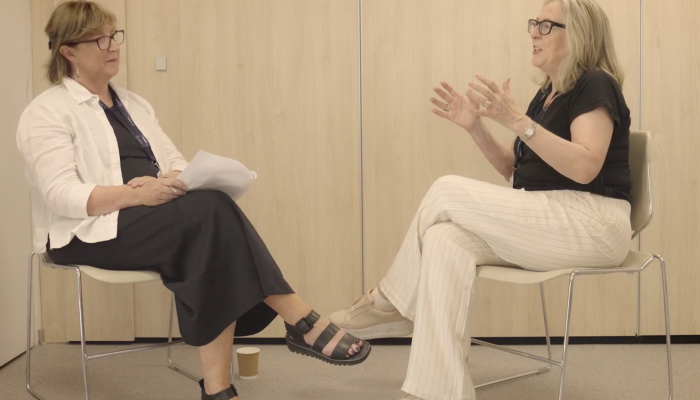
Michele Burman is a Professor of Criminology at the University of Glasgow, UK, and a former President of the European Society of Criminology. Prof Burman is a feminist criminologist with long-standing research interests in women, crime, and punishment, as well as criminal justice responses to different forms of sexual and gender-based violence. In this field, she has led dozens of research grants, providing evidence-based advice to criminal justice policy-makers and practitioners for many years. She has also played leading roles in various academic spheres, serving as co-founder and co-director of the Scottish Centre for Crime and Justice Research (SCCJR) from 2006 to 2016. In addition, Prof Burman was co-Editor-in-Chief of the journal Criminology and Criminal Justice (2015-2020) and has co-convened the ESC Working Group on Gender, Crime and Justice since 2010. In recognition of her long and fruitful career, she was appointed a Fellow of the Royal Society of Edinburgh (FRSE) and a Fellow of the Academy of Social Sciences (FAcSS), and she received a CBE (Commander of the Order of the British Empire) in 2019 for services to criminology.
In the framework of the 25th Annual Conference of the ESC, Michele Burman was interviewed by her long-time colleague Lesley McAra (University of Edinburgh, UK). In this conversation, Burman reflects on her former role as a feminist activist and the implications of being a feminist criminologist. Commenting on her research achievements, she recognises both the promises and pitfalls of the decades-long institutional efforts to counter gender-based violence. In addition, Prof Burman examines the epistemological and methodological innovations brought about by feminist criminology.
Burman also revisits her experience in producing research for policymaking purposes and collaborating with institutional actors. This leads her to stress that institutional collaboration schemes are, among other aspects, what makes Scottish criminology so distinctive. Beyond exploring the current state of criminology in Scotland, Burman’s interview concludes with reflections on her tenure as ESC President and the role the ESC should play in strengthening criminology studies, particularly in jurisdictions lacking proper academic freedom.